
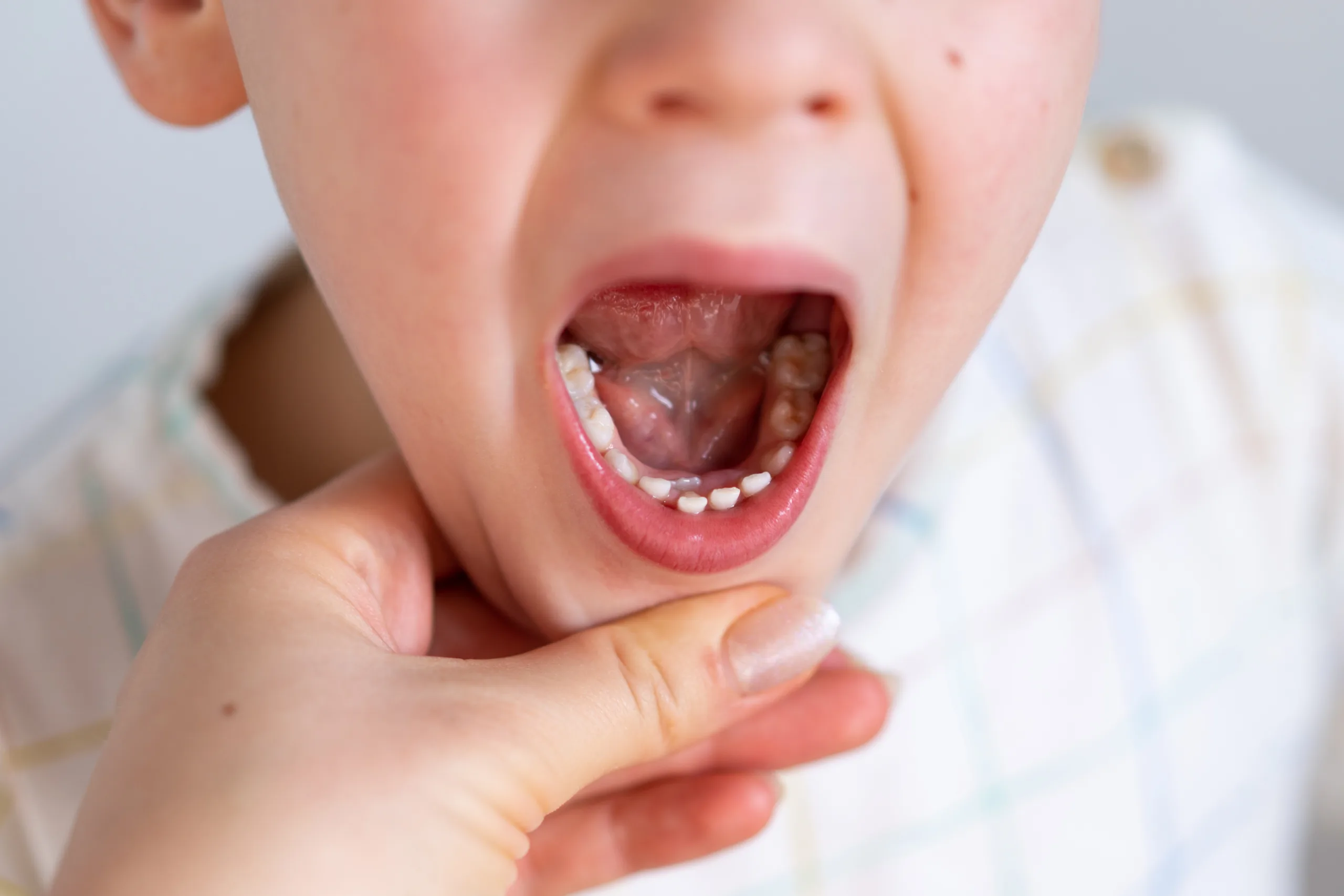
There’s something a little bittersweet about the day your child comes running to you with a tiny tooth in their hand, missing a gap in their smile for the first time. It’s a classic childhood milestone but it also comes with a lot of questions. Is this happening too early? Too late? Is it normal for it to be loose for weeks before it finally comes out?
If you’re a Springdale parent navigating this stage for the first time (or even the third), here’s everything you need to know about the order, timing, and what’s actually happening beneath the gums.
The Short Answer: Most Kids Start Around Age 5 or 6
For the majority of children, the first baby tooth usually one of the lower front teeth becomes loose and falls out somewhere between ages 5 and 7. By the time kids reach their early teens, around 12 or 13, most of the 20 baby teeth have been replaced by 28 of the eventual 32 permanent teeth (the last four, the wisdom teeth, show up much later).
But “most kids” is the key phrase here. Some children start as early as 4, and others don’t lose their first tooth until closer to 7 or 8 and both can be completely normal.
The General Order: Which Teeth Go First?
Baby teeth tend to fall out in roughly the same order they came in first in, first out. According to the American Dental Association’s eruption charts, here’s the typical sequence:
Lower central incisors (bottom front teeth) usually the first to go, around ages 5–7
Upper central incisors (top front teeth) close behind, around ages 6–8
Lateral incisors (the teeth next to the front teeth, top and bottom) around ages 7–8
First molars around ages 9–11
Canines (the pointy teeth) around ages 9–12
Second molars the last to go, typically between ages 10–12
By around age 12 or 13, most kids have a full set of permanent teeth, minus wisdom teeth, which won’t arrive until the late teens or early twenties.
What’s Actually Happening Underneath the Gums
It might look like baby teeth just “fall out” on their own, but there’s a lot going on beneath the surface that most parents never see.
As the permanent tooth underneath develops, it gradually pushes upward (or downward, for the lower jaw) toward the baby tooth above it. This pressure causes the roots of the baby tooth to slowly dissolve a process dentists call resorption. Eventually, there’s so little root left holding the baby tooth in place that it becomes loose and wiggly, until it finally falls out on its own (or with a little help from an excited kid and a tissue).
This is also why baby teeth sometimes look like they have almost no root left when they finally come out because most of it has already been absorbed by the body.
What If a Tooth Is Loose for a Really Long Time?
This is one of the most common questions we hear, and the answer is: it’s usually nothing to worry about.
Some teeth loosen gradually over several weeks before they’re ready to come out, while others seem to go from “perfectly fine” to “hanging by a thread” in a matter of days. Both patterns are normal. Kids can usually wiggle a loose tooth out themselves once it’s ready there’s rarely a need to pull it before it’s good and ready on its own.
The exception is if a loose tooth is causing pain, bleeding that won’t stop, or if it’s been loose for an unusually long time (think months, not weeks) without progressing that’s worth a quick check with your child’s dentist.
Early or Late Tooth Loss: When Should Springdale Parents Take Notice?
Losing Teeth Too Early (Before Age 4 or 5)
If your child loses a baby tooth significantly earlier than expected especially due to an injury, a fall, or what looks like decay it’s worth getting it checked out. Premature tooth loss can sometimes cause nearby teeth to drift into the empty space, which may crowd out the permanent tooth trying to come in underneath.
In some cases, a dentist may recommend a small device called a space maintainer basically a placeholder that keeps the gap open until the permanent tooth is ready to erupt.
Losing Teeth Too Late (No Loss by Age 7–8)
On the flip side, if your child hasn’t lost a single tooth by age 7 or so, it’s not necessarily a red flag some kids just develop a bit later. However, it’s a good topic to bring up at their regular checkup, just so the dentist can confirm everything is progressing as expected underneath the gums (often visible on routine X-rays).
“Shark Teeth”: When Permanent Teeth Come in Behind Baby Teeth
Here’s something that throws a lot of parents into a panic: sometimes a permanent tooth starts coming in behind a baby tooth that hasn’t fallen out yet creating a temporary “double row” of teeth that looks a bit like a shark’s mouth.
This is actually pretty common, especially with the bottom front teeth, and usually resolves itself within a few weeks to months as the baby tooth loosens and falls out, allowing the permanent tooth to shift into its proper position. If the baby tooth seems stubbornly stuck and isn’t loosening on its own after a couple of months, a quick visit to your children’s dentist can help sometimes a small nudge is all that’s needed.
Tips for Parents Navigating the Tooth Loss Years
Keep up with regular checkups. Twice-a-year visits aren’t just about cleanings they let your child’s dentist track how the bite is developing and catch anything unusual early, before it becomes a bigger issue.
Don’t force a loose tooth out too early. Even if it’s wiggly, let your child work it out naturally (or with very gentle encouragement) once the timing is right. Pulling a tooth that isn’t ready can be painful and may cause unnecessary bleeding.
Watch oral hygiene during the “mixed dentition” stage. This is the period when your child has a combination of baby and permanent teeth usually ages 6 to 12. It can be a tricky time for brushing, since new permanent molars are often harder to reach and more cavity-prone right after they come in.
Celebrate the milestones. Tooth loss can be exciting for some kids and a little scary for others. A simple tradition a special note, a small reward, or just making a big deal out of it can turn an uncertain moment into a fun one.
When to Check In With a Children’s Dentist in Springdale
While most tooth loss follows a predictable pattern, every child develops a little differently. It’s worth scheduling a visit if you notice:
- A baby tooth lost significantly earlier than expected (especially from injury or decay)
- No teeth lost by age 7–8
- A permanent tooth coming in noticeably crooked or in an unusual position
- A “shark tooth” situation that hasn’t resolved after a couple of months
- Persistent pain, swelling, or bleeding around a loose or newly erupted tooth
Routine checkups every six months are the easiest way to stay ahead of all of this your child’s dentist will track the timeline and flag anything worth a closer look long before it becomes a concern.
Every wiggly tooth, every gap-toothed grin, and every visit from the “tooth fairy” is part of a much bigger picture your child’s growing smile. Regular checkups make sure that picture stays on track.
📞 Schedule your child’s next checkup with our Springdale office today. We’ll keep an eye on every stage of their smile’s development, answer your questions, and make sure those new permanent teeth come in healthy and strong.
Frequently Asked Questions
Q1: Is it bad if my child loses their first tooth at age 4 instead of 5 or 6?
Not necessarily there’s a fairly wide normal range, and some kids start a little earlier than average. As long as it’s not the result of an injury or visible decay, slightly early tooth loss often just means that child’s overall development is running a bit ahead. If you’re unsure, mention it at your next checkup.
Q2: My child’s tooth has been loose for almost two months is that normal?
Yes, this is fairly common. Some teeth loosen gradually over an extended period before they’re ready to come out. As long as it’s not causing significant pain, persistent bleeding, or interfering with eating, there’s usually no need to intervene just let it run its course.
Q3: Should I let my child pull out a loose tooth themselves?
Gentle wiggling is fine, and most kids end up working the tooth out themselves once it’s ready. Avoid forcefully pulling a tooth that’s still firmly attached, as this can cause pain, bleeding, or even damage to the gum tissue. If a tooth seems “stuck” despite being very loose, a quick visit to the dentist can help.
Q4: My child has a permanent tooth coming in behind a baby tooth that hasn’t fallen out is this an emergency?
No, this is a common situation often nicknamed “shark teeth,” especially with the lower front teeth. It usually resolves on its own within a few weeks to months as the baby tooth loosens. If it hasn’t improved after a couple of months, it’s worth having a dentist take a look, but it’s rarely considered urgent.
Q5: How can I tell if my child is losing teeth in the right order?
The general pattern follows the order teeth originally came in lower front teeth first, followed by upper front teeth, then moving toward the back of the mouth with the molars and canines coming later. Slight variations in order are common and usually not a concern. Regular checkups allow your child’s dentist to monitor the overall pattern and confirm everything is tracking normally.