
When a child needs dental treatment, parents naturally want to know how the experience will feel, whether their child will be comfortable, and what steps will help keep them safe. Those questions become even more important when a child feels anxious about the dentist, has difficulty sitting still, or needs several teeth treated.
Two options that may come up during a dental consultation are sedation and general anesthesia. Although people sometimes use these terms interchangeably, they describe different levels of medication-assisted care. The right approach depends on the child’s health, age, anxiety level, treatment needs, and ability to cooperate—not simply on how nervous the child feels.
For families researching Kids Sedation Dentistry Springdale, understanding the difference can make it easier to discuss treatment options with a dental professional. Hometown Family Dental in Springdale, Arkansas, offers sedation services that include IV sedation and general anesthesia. A consultation can help parents understand which options may be appropriate for their child’s individual situation.
What Is Dental Sedation for Children?
Dental sedation uses medication to help a child feel calmer or less aware of a dental procedure. Depending on the medication and its intended effect, a child may remain awake, become drowsy, or reach a deeper level of sedation.
Sedation is not the same as local anesthesia. Local anesthesia numbs a specific area of the mouth to reduce pain during treatment. Sedation affects alertness, anxiety, or awareness. A dentist may use local anesthesia alongside sedation when needed.
Common types of dental sedation
The options available depend on the provider, the procedure, and the child’s needs.
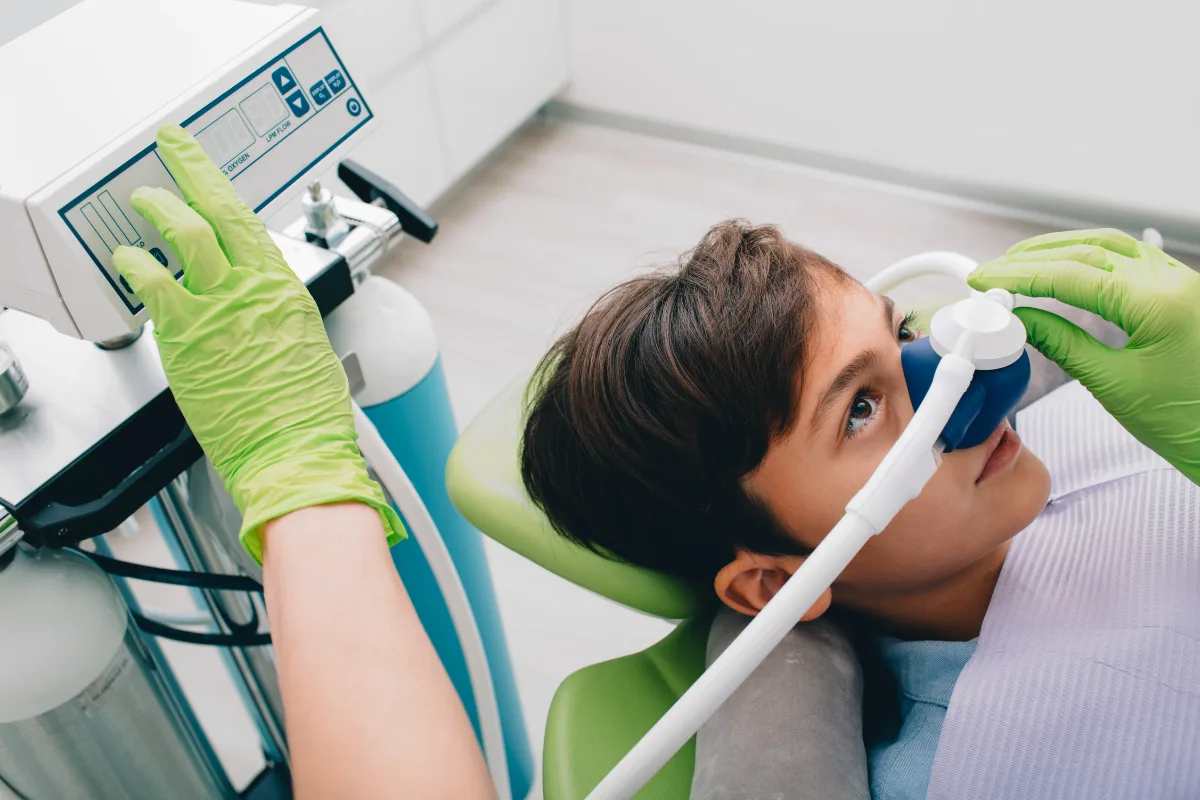
- Nitrous oxide: Often called laughing gas, nitrous oxide is inhaled through a small mask. It can help some children relax while they remain awake and responsive.
- Oral sedation: Medication is taken by mouth to produce a calming effect. The level of drowsiness varies, and the child must be assessed and monitored according to the intended level of sedation.
- IV sedation: Medication is delivered through a vein. It can produce a deeper level of sedation, depending on the medicines and dosing used. Deep sedation requires appropriate monitoring and trained personnel because a child’s breathing and responsiveness can be affected.
These options are not interchangeable, and not every child is a candidate for every method. The dentist or qualified sedation provider must consider the child’s medical history and the procedure before recommending an approach.
What Is General Anesthesia for Kids?
General anesthesia is a medication-induced state in which a child is unconscious and does not respond to normal stimulation during the procedure. The child is not simply relaxed or sleepy. General anesthesia requires specialized care, including continuous monitoring and personnel prepared to manage breathing and other vital functions.
It may be considered when a child needs extensive dental work, cannot safely or comfortably cooperate with treatment while awake, or has other circumstances that make general anesthesia the most appropriate option after an individual assessment.
General anesthesia may be provided in a properly equipped dental facility, an outpatient surgical center, or a hospital, depending on the child’s needs and the provider’s arrangements.
Does general anesthesia mean the child will feel pain?
General anesthesia is intended to prevent awareness during the procedure. The dental team may also use local anesthesia or other pain-control measures when appropriate. After treatment, parents should follow the specific recovery and pain-management instructions provided by the treating team.
It is important to understand that general anesthesia is a significant medical intervention, not simply a stronger version of laughing gas. The provider should explain why it is being considered, how the child will be monitored, and what recovery may involve.
Dental Sedation vs. General Anesthesia: Key Differences
The main difference is the child’s level of consciousness and responsiveness. Sedation covers a range of effects, while general anesthesia involves unconsciousness.
| Consideration | Dental sedation | General anesthesia |
| Level of awareness | Varies from relaxed and awake to deeply sedated | Child is unconscious |
| Ability to respond | Depends on the depth of sedation | No purposeful response during general anesthesia |
| Typical purpose | Help manage anxiety, discomfort, or cooperation challenges | Allow treatment when unconsciousness is clinically appropriate |
| Monitoring | Depends on the sedation level and medication | Requires continuous monitoring by appropriately trained professionals |
| Recovery | Depends on the medication and depth of sedation | Requires monitored recovery before discharge |
| Suitability | Determined by the child’s health and planned treatment | Determined by the child’s health, treatment needs, and anesthesia assessment |
A child receiving deep sedation may have difficulty maintaining breathing independently. That is one reason the intended depth of sedation, provider qualifications, monitoring, and rescue capabilities matter so much. The distinction is clinical—not just a matter of which term sounds less intimidating.
When Might a Child Need Dental Sedation?
Dental sedation may be considered when routine communication and behavior-guidance techniques are not enough to help a child complete necessary care comfortably and safely.
Dental anxiety or fear
Some children become very distressed by unfamiliar sounds, dental instruments, the feeling of treatment, or previous negative experiences. Depending on the child’s age and circumstances, the dental team may first try approaches such as explaining each step, using distraction, offering breaks, or gradually introducing instruments.
If these approaches are insufficient, a dentist may discuss whether sedation is appropriate.
Difficulty cooperating during treatment
Young children may have limited ability to remain still or understand instructions for the duration of a procedure. The dentist must consider whether treatment can be completed safely with ordinary behavior guidance or whether another approach is needed.
Treatment that requires additional support
A child who needs several procedures or more involved dental care may benefit from an approach that helps the team complete treatment safely. However, the number of teeth requiring care does not automatically determine which method is best.
The dentist should discuss the treatment plan, alternatives, expected duration, and the child’s medical circumstances before making a recommendation.
When Might General Anesthesia Be Considered?
General anesthesia may be appropriate for some children who need extensive treatment or cannot safely tolerate necessary dental care while awake. It may also be considered in certain cases involving developmental, behavioral, or medical factors that affect the child’s ability to cooperate.
Examples that may prompt a discussion include:
- Extensive dental needs requiring several procedures.
- A child who cannot cooperate sufficiently for the planned treatment.
- Severe anxiety or special healthcare needs that make other approaches unsuitable.
- A procedure for which the treating team determines that general anesthesia offers the most appropriate conditions for care.
These are possible reasons for evaluation, not automatic indications. A child’s age or anxiety alone does not mean general anesthesia is necessary. The treating dental and anesthesia professionals should explain the reasons for their recommendation and whether other options are reasonable.
Is Dental Sedation or General Anesthesia Safer for Children?
There is no single answer that applies to every child. Both sedation and general anesthesia have potential benefits and risks. The appropriate choice depends on the child’s health, the procedure, the medications involved, and the qualifications and preparation of the professionals providing care.
Deeper levels of sedation can affect breathing, airway protection, and responsiveness. General anesthesia also requires careful planning and monitoring. The goal is not to choose the option with the least intimidating name; it is to choose an appropriate method and provide care with the required safeguards.
Before treatment, parents should ask about:
- The provider’s qualifications and experience with children.
- Who will administer the medication and who will monitor the child.
- How breathing, oxygen levels, heart rate, and other vital signs will be monitored as appropriate.
- How the team prepares for and responds to an emergency.
- The child’s medical history, allergies, medications, and any previous anesthesia or sedation reactions.
- Fasting instructions, recovery expectations, and discharge requirements.
The American Academy of Pediatric Dentistry and American Academy of Pediatrics publish guidance on pediatric sedation, including presedation assessment, monitoring, staffing, recovery, and discharge. Parents can review the AAPD’s pediatric sedation and anesthesia safety resources and discuss questions with their child’s treating team.
No provider can promise zero risk. A clear explanation of the plan and appropriate safety measures can help parents make an informed decision.
How Should Parents Prepare a Child for Sedation or General Anesthesia?
Preparation depends on the method being used. The dental team should give you specific instructions before the appointment, and following them is important for your child’s safety.
Before the appointment
- Share your child’s complete medical history, including allergies, medications, supplements, recent illnesses, and previous experiences with sedation or anesthesia.
- Follow the exact food and drink restrictions provided by the treating team. Do not assume the same fasting rules apply to every method.
- Ask whether your child should take regular medication as usual or follow different instructions. Do not stop prescribed medication without guidance.
- Confirm the arrival time, expected appointment length, transportation requirements, and whether an adult must remain available during recovery.
- Explain the visit to your child in a calm, age-appropriate way. Avoid making promises about what they will or will not feel.
After treatment
Children may remain sleepy, unsteady, or less coordinated for a period after sedation or general anesthesia. The expected recovery varies according to the medication and procedure.
Follow the discharge instructions regarding supervision, food and drinks, activity, and medication. Keep your child from engaging in activities that could lead to falls or injuries until the treating team says normal activity can resume.
Contact the treating provider if you are concerned about your child’s recovery. Seek emergency medical care for severe breathing difficulty, blue or gray lips, or a child who cannot be awakened as expected.
What Should You Ask Hometown Family Dental About Your Child’s Options?
If your child needs dental treatment and you are considering sedation, a consultation is a good time to understand the available options and how the team will determine what is appropriate.
At Hometown Family Dental, families in Springdale can ask about the practice’s sedation services, including IV sedation and general anesthesia. The questions below can help guide the conversation:
- Which options are available for my child’s planned treatment?
- Why are you recommending this option rather than another?
- Who will administer the medication and monitor my child?
- What should we do to prepare, including food, drinks, and regular medications?
- What should we expect during recovery, and when should we call for help?
- Will the planned treatment likely be completed in one visit, or could additional appointments be needed?
The answers should be specific to your child’s health and treatment plan. If another facility or anesthesia provider is recommended, ask how the arrangements work and who will coordinate your child’s care.
Frequently Asked Questions
Is sedation the same as putting a child to sleep?
No. Some forms of sedation help a child relax while remaining awake. Deeper sedation can make a child very sleepy and less responsive. General anesthesia makes the child unconscious during treatment.
Is general anesthesia better than sedation for children?
Not necessarily. The best option depends on the child’s medical history, age, ability to cooperate, and dental treatment needs. A dental or anesthesia professional should explain the benefits and risks of the options being considered.
Can my child eat before dental sedation?
Fasting instructions depend on the type of medication and planned procedure. Follow the exact instructions from your child’s treating team. If your child eats or drinks outside the permitted instructions, contact the provider before the appointment rather than guessing whether treatment can proceed.
How long does it take a child to recover?
Recovery varies by medication, sedation depth, and procedure. A child may be drowsy or unsteady afterward and may need adult supervision. The treating team should explain what to expect and when normal activities can resume.
Where can parents ask about kids’ sedation dentistry in Springdale, AR?
Hometown Family Dental provides pediatric dental services in Springdale, including IV sedation and general anesthesia. Parents can contact the practice to discuss their child’s needs, the available options, and whether an evaluation is appropriate.
Help Your Child Get the Dental Care They Need
Choosing between dental sedation and general anesthesia can feel overwhelming when all you want is a safe, comfortable experience for your child. Understanding the difference is a useful first step, but the right choice should always be based on an individual assessment, not a one-size-fits-all rule.
Hometown Family Dental helps families in Springdale, Arkansas, explore pediatric dental care options based on their child’s needs. If your child is anxious about treatment or needs more dental work, contact Hometown Family Dental to discuss the available options and schedule a consultation.
Every child deserves a thoughtful treatment plan, clear answers for parents, and care that takes their health and comfort seriously.