
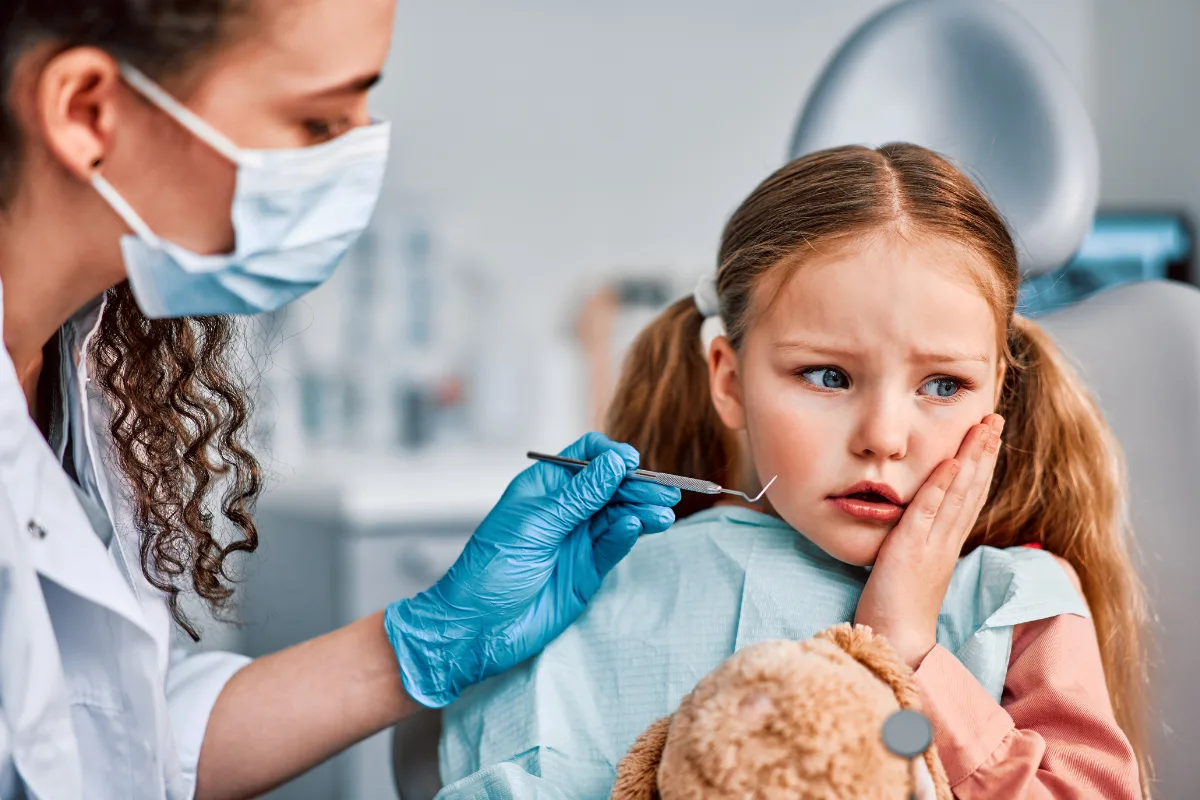
A fall, collision, sports accident, or other blow to the mouth can sometimes cause a child’s tooth to look shorter than it did before the injury or even appear to have disappeared into the gum. When this happens, the tooth may have been pushed deeper into its socket. This type of dental trauma is called intrusion or intrusive luxation.
It can be alarming to see, especially when the tooth is a baby tooth or a developing permanent tooth. Parents may wonder whether the tooth needs to be pulled out, whether it can come back down on its own, or whether the injury could affect the adult tooth underneath.
If you’re looking for a Kids Emergency Dentist Springdale after a child has injured a tooth, prompt dental evaluation is important. The appropriate treatment depends on whether the injured tooth is a baby tooth or permanent tooth, how far it has moved, and what the examination and dental imaging show.
What Does It Mean When a Tooth Is Pushed Into the Gum?
A tooth normally sits within a socket in the jawbone. During an intrusive dental injury, a force pushes the tooth farther into that socket.
The visible portion of the tooth may therefore look:
- Shorter than the surrounding teeth
- Partially hidden by the gum
- Completely absent from view in a more severe injury
- Positioned differently from the matching tooth on the other side
The injury can affect more than the visible tooth. The supporting tissues around the tooth can also be damaged.
Intrusion is considered a type of luxation injury, meaning the tooth has been displaced without necessarily being knocked out.
The International Association of Dental Traumatology (IADT), whose trauma guidelines are endorsed by the American Academy of Pediatric Dentistry (AAPD), specifically addresses intrusive injuries in both primary and permanent teeth.
Is a Tooth Pushed Into the Gum a Dental Emergency?
It should be evaluated promptly.
A tooth that has been pushed into the gum is not something parents should try to reposition at home. The injury needs to be assessed by a dental professional who can determine where the tooth has moved and whether surrounding structures have also been affected.
The AAPD’s current policy on emergency oral care includes orofacial trauma among children’s dental emergencies and emphasizes timely access to appropriate dental evaluation and follow-up.
If your child has experienced a significant facial injury along with the dental trauma, medical evaluation may also be necessary.
Seek emergency medical care immediately if the injury involves concerns such as:
- Difficulty breathing
- Difficulty swallowing
- Significant facial swelling
- Uncontrolled bleeding
- Loss of consciousness
- A suspected serious head injury
- A suspected jaw or facial fracture
For a dental injury without those medical warning signs, contacting your child’s dentist for prompt evaluation is an appropriate next step.
What Should You Do Right After the Injury?
The first few minutes can be stressful, but try to avoid making the injury worse.
1. Do not try to pull the tooth back into place
A tooth that has been pushed into the gum should not be pulled, pushed, or repositioned by a parent.
The correct treatment depends on the type of tooth and the direction and severity of the displacement.
2. Keep your child calm
Children may be frightened after an accident, particularly if they see that their tooth looks different.
Reassure your child and avoid repeatedly touching the injured area.
3. Check for other injuries
Look beyond the tooth.
Check whether your child has injuries to the lips, tongue, gums, jaw, or face. Also consider whether the child hit their head during the accident.
4. Contact a dental office promptly
Tell the dental team that the tooth appears to have been pushed into the gum. This gives them useful information about the urgency and type of injury.
5. Follow the dental team’s instructions about eating and cleaning
Depending on the injury, your child’s dentist may recommend modifications to eating and oral hygiene while the area heals.
Do not rely on the tooth’s appearance alone to determine whether the injury is serious.
What Happens If a Baby Tooth Is Pushed Into the Gum?
Baby teeth require special consideration because their roots are located close to the developing permanent teeth underneath them.
This is one of the most important differences between an injury to a primary tooth and an injury to a permanent tooth.
According to the IADT guidelines for primary teeth, an intruded baby tooth is generally allowed to spontaneously reposition itself, regardless of the direction of displacement. The guidelines also recommend prompt referral to a child-focused dental team experienced in managing dental injuries.
That means parents should not assume that a baby tooth needs to be pulled out simply because it has moved upward into the gum.
In some cases, the tooth may gradually move back toward its normal position.
However, follow-up is important because the injury can affect the injured tooth and, in some cases, the developing permanent tooth.
The IADT notes that spontaneous improvement in the position of an intruded primary tooth commonly occurs within months, although the timeline can vary and severe injuries require longer-term monitoring.
Can an Intruded Baby Tooth Affect the Permanent Tooth?
It can.
The permanent tooth developing beneath a baby tooth is still forming. Because the primary and permanent teeth are anatomically close, trauma to a baby tooth can sometimes affect the developing successor.
Possible complications can include changes in the development or eruption of the permanent tooth.
The IADT specifically notes that severe trauma to primary teeth, including intrusion, can affect the permanent successor.
That does not mean every child with an intruded baby tooth will have a problem with their permanent tooth.
It means the injury deserves proper evaluation and appropriate follow-up rather than simply being ignored once the initial swelling or discomfort improves.
What If a Permanent Tooth Is Pushed Into the Gum?
A permanent tooth that has been pushed into the socket requires a different treatment approach.
Permanent teeth are important to preserve whenever possible, and the treatment decision depends on factors such as:
- The child’s age and stage of dental development
- Whether the tooth has a fully developed or developing root
- How far the tooth has been displaced
- Whether the tooth has affected surrounding bone or tissues
- Whether the bite has been affected
- The condition of the tooth’s supporting tissues
- Whether additional injuries are present
The dentist may use dental imaging to determine the tooth’s position and evaluate the surrounding structures.
Unlike an intruded baby tooth, a permanent tooth may require active treatment to reposition or otherwise manage the injury, depending on the circumstances.
This is one reason parents should not assume that treatment for a permanent tooth will be the same as treatment for a baby tooth.
How Does a Dentist Diagnose an Intruded Tooth?
The first step is a careful clinical examination.
Your child’s dentist may look at:
- The position of the injured tooth
- The amount of visible tooth structure
- Tooth mobility
- The surrounding gums
- The child’s bite
- Signs of bleeding or soft-tissue injury
- Nearby teeth
- Symptoms such as pain or tenderness
Dental X-rays may also be recommended.
Imaging can help the dentist determine how the tooth has moved and its relationship to nearby structures. For primary tooth intrusion, the IADT guidelines specifically recommend diagnostic radiographs at presentation to establish a baseline and help determine the direction of displacement.
The goal is not simply to take an X-ray. It is to understand the injury well enough to choose an appropriate treatment and follow-up plan.
Will the Tooth Have to Be Removed?
Not necessarily.
One of the biggest misconceptions parents may have after an intrusive injury is that a tooth that has moved into the gum automatically needs extraction.
That is not true for every case.
For an intruded baby tooth, current IADT guidance generally favors allowing the tooth to reposition itself rather than immediately removing it, provided the clinical situation is appropriate.
However, complications can change the treatment plan.
A dentist may need to reassess the tooth if there are signs such as:
- Infection
- Swelling
- An abscess or draining area
- Increasing mobility
- Persistent symptoms
- Abnormal healing
- Problems involving the developing permanent tooth
The AAPD’s pediatric oral-surgery guidance emphasizes individualized management of traumatized teeth and the importance of protecting developing permanent teeth and surrounding tissues.
What Does Recovery Look Like?
Recovery depends heavily on the type and severity of the injury.
An intruded tooth may not immediately look normal after the accident. Parents should expect that the dental team may want to monitor the tooth over time rather than simply treating it once and considering the problem finished.
For primary tooth intrusion, IADT guidance recommends clinical follow-up at several intervals, including approximately one week, four to six weeks, eight weeks, six months, and one year, with additional monitoring in certain severe cases.
That follow-up helps the dentist watch for signs of:
- Normal repositioning
- Infection
- Changes in tooth color
- Abnormal mobility
- Problems with tooth development
- Effects on the permanent successor
The exact follow-up schedule for your child may differ based on the injury and the treating dentist’s findings.
What Signs Should Parents Watch For After the Injury?
Even after the initial examination, parents should pay attention to changes.
Contact your child’s dental team if you notice:
- Increasing pain
- New or worsening swelling
- A gum boil or draining area
- Fever or signs of illness
- Increasing tooth mobility
- Persistent or worsening discoloration
- Difficulty eating
- Changes in the way the teeth come together
- The injured area appears to be getting worse rather than better
A tooth can sometimes look relatively calm immediately after an injury and develop complications later.
That is why follow-up matters even if your child seems comfortable.
The IADT identifies signs such as swelling, abscess, increased mobility, and persistent discoloration among findings that may indicate an unfavorable outcome after primary tooth intrusion.
What If My Child’s Tooth Was Pushed Into the Gum During Sports?
Sports are a common setting for dental injuries, particularly when children participate in activities involving falls, collisions, or contact with hard surfaces.
If a child’s tooth appears to have moved into the gum after a sports accident, treat it as a dental injury rather than waiting to see whether it “comes back down.”
If your child plays sports regularly, a properly fitted mouthguard can also help reduce the risk of certain orofacial injuries. The AAPD supports protective equipment, including mouthguards, as part of dental-trauma prevention.
How Hometown Family Dental Can Help After a Child’s Dental Injury
A dental injury can be stressful for both children and parents, especially when a tooth suddenly looks shorter or appears to have disappeared into the gum.
At Hometown Family Dental, we provide children’s dental care in Springdale, including emergency dental evaluations and treatment for injuries such as chipped, cracked, and knocked-out teeth. Our services also include surgical procedures, sedation options, and restorative care when appropriate.
When your child’s tooth has been pushed into the gum, our team can evaluate the injury and help determine the appropriate next step.
Depending on the findings, that may involve monitoring, follow-up care, restorative treatment, or coordination with another dental specialist when additional care is needed.
The important thing is to have the injury evaluated rather than trying to reposition the tooth yourself.
FAQs About a Child’s Tooth Being Pushed Into the Gum
Can a tooth that was pushed into the gum come back down?
Yes, some intruded primary teeth can spontaneously reposition over time. The IADT specifically recommends allowing an intruded primary tooth to spontaneously reposition in appropriate cases. The amount of movement and recovery time varies by injury.
Should I push my child’s tooth back into place?
No. Parents should not attempt to reposition an intruded tooth themselves. Contact a dental professional so the injury can be examined and managed appropriately.
Is a baby tooth pushed into the gum more serious than a loose tooth?
Both injuries deserve evaluation, but intrusion can be significant because a baby tooth is close to the developing permanent tooth. The appropriate treatment depends on the specific injury and dental findings.
Can an injury to a baby tooth damage the permanent tooth underneath?
It can. Primary teeth and their developing permanent successors are closely related, and certain traumatic injuries can affect the developing permanent tooth. However, an injury does not automatically mean the permanent tooth will be damaged.
How quickly should my child see a dentist after a tooth is pushed into the gum?
A child with an intruded tooth should receive prompt dental evaluation. The AAPD recognizes orofacial trauma as a pediatric dental emergency, and IADT guidance recommends rapid referral to a child-oriented team experienced in managing dental injuries.
Conclusion
Seeing your child’s tooth pushed into the gum after an accident can be frightening, but there is no need to assume the tooth must automatically be removed.
The right treatment depends on whether it is a baby or permanent tooth, how far it has moved, what the dental examination shows, and whether nearby teeth or developing structures have been affected.
For primary teeth, some intruded teeth can gradually reposition themselves. Permanent teeth may require a different treatment approach. In either situation, prompt evaluation and appropriate follow-up are important.
If you have experienced a Children Dental Emergency Springdale, AR, Hometown Family Dental can help evaluate the situation and determine what care may be appropriate. Contact our team if your child has a tooth that appears pushed into the gum, has been displaced after an accident, or has another urgent dental concern.